May 29, 2023 — No Comments

A Beginner’s Guide to Creating SEO-Optimized Product Pages

Having a strong online presence is crucial for the success of any business, especially those operating in the e-commerce space. Search engine optimization (SEO) plays a vital role in driving organic traffic to your website and increasing brand awareness by potential customers.

Whether you have a long-time e-commerce business or a new online store, understanding the fundamentals of SEO and how to optimize your product pages can make a significant difference in your online visibility and sales. This beginner's guide to SEO will provide you with essential insights and step-by-step instructions on creating product pages that are visually appealing and optimized for search engines.

We will walk you through various aspects of product page optimization, from choosing the right primary keyword to crafting compelling product descriptions. You will learn how to optimize title tags and meta descriptions to increase click-through rates and the importance of internal linking for higher rankings. Additionally, we'll explore the power of a rich snippets product and schema markup in enhancing the visibility of your products in search engine results.

So, whether you're selling fashion apparel, electronics, or handmade crafts, optimizing your product pages for SEO is essential to attract targeted traffic, improve your search engine rankings, and ultimately drive more conversions. It’s time to dive into the world of an e-commerce SEO strategy and unlock the potential of your e-commerce business.

Develop Focus Pages for Your SEO Strategy

Focus pages are more important than you think when creating and executing an effective SEO strategy. A focus page is a specific web page optimized to target a particular keyword or topic.

This central page collects all the relevant content and information related to that keyword or topic on your website. By strategically optimizing focus pages, you can significantly improve your search engine rankings and attract more organic traffic to your site.

One concept that can guide the creation of focus pages is the Pareto principle, also known as the 80/20 rule. This principle states that roughly 80% of the results come from 20% of your creations. When applied to SEO, it means that a significant portion of your website's traffic and conversions will come from a small percentage of your web pages.

Optimizing category pages is essential because they are the foundation of your product offerings. These more general pages often target broader keywords that attract a large volume of searches. By carefully selecting relevant keywords and optimizing the category page content, meta tags, and headings, you can increase the visibility of your category pages in search engine results and attract more potential customers to explore your product offerings.

Work to optimize product titles, descriptions, images, and user-generated reviews to provide comprehensive and persuasive information to potential buyers.

What should a focus page include? Aim to answer common questions, provide in-depth information, and offer unique insights that set you apart from competitors. This will improve your chances of ranking higher in search results and increase your credibility as a reliable and authoritative website.

Remember to track the performance of your focus pages using analytics tools. Take note of key metrics such as organic traffic, keyword rankings, conversion rates, and user engagement to assess the effectiveness of your optimization efforts. Use this data to update and revamp your SEO strategy, continually making data-driven decisions to build better SEO-optimized product pages.

When it comes to optimizing product pages, there are several key factors to consider. Let's explore the best practices for creating SEO-optimized product pages.

Choose the Right Primary Keyword

To begin, aligning the product name with the primary keyword is essential. Consider search queries that are commonly used by your target audience, such as brand name, color, size, and SKU. By incorporating these keywords strategically, you can enhance the visibility of your product page. Let's take an example to illustrate this concept further.

Imagine you're selling a comfortable mattress. The primary keyword could be "best mattress 2023." In addition to the primary keyword, you can include related terms like "luxurious mattress," "cooling technology," and other relevant descriptors. Remember to hone in on what makes your product unique compared to others in the industry.

Title Tag Optimization

The title tag plays a vital role in attracting clicks and improving click-through rates (CTR). It's important to optimize the title tag by including the primary keyword and brand name. Consider the optimal length of the title tag, ensuring it is concise yet descriptive. Let's continue with our mattress example:

Title Tag: "Best Mattress 2023 - XYZ Brand | Premium Comfort"

In this one tag, you provide all the information the customer needs. They can stop their search because they know clicking on your website will provide an answer to their search query.

Meta Description Optimization

The meta description also influences CTR. Craft a compelling meta description that includes the product's unique selling points. Keep the length within the recommended limits and consider incorporating the primary keyword naturally. Here's an example using our mattress:

Meta Description: "Discover the best mattress of 2023 - XYZ Brand. Experience a restful night in luxury and comfort with our premium mattresses. Order now and sign up for a future of sweet dreams."

Write Intriguing Product Descriptions

Optimizing the product description is crucial for SEO and providing customers with valuable information. Researching the search engine results pages (SERPs) can help identify whether users seek more descriptive product pages. Tailor the product description accordingly, highlighting key features, benefits, and unique selling points. Let's continue with our mattress example:

Product Description: "Experience the next level of sleeping soundly with the XYZ Brand mattress. This premium mattress is made from organic cotton, eco-friendly padding, and a lush pillowtop and offers customizable firmness. Get the best night’s sleep with our premium mattresses."

Internal Linking Strategy Development

Internal linking plays a significant role in SEO, particularly for product pages. It helps establish the importance of specific products to search engines, helping with higher rankings.

Implement a comprehensive internal linking strategy by including links from the home page, pre-footer, navigation, related products, and top-selling products. Connect all pages within your site so that you do not have any orphan pages that cannot be reached through other pages on your website.

Beware of Cannibalization

Cannibalization occurs when multiple internal pages compete for the same keyword or topic. You do not want to compete with your own page. This can lead to confusion for search engines. To address this, utilize canonical tags to flag the preferred version of a page. For example, if you have multiple variations of the same mattress, such as the "plush mattress" in different colors, you can use canonical tags to avoid cannibalization issues.

Schema Markup Optimization

Schema markup is a powerful tool that allows search engines to understand the content and context of your web pages better. By implementing schema markup, you can increase your website's visibility in search engine results. When you google rich snippets products, you will find products that provide valuable information without having to click through.

Here are some key benefits of schema markup:

image from ahrefs.com

Product Snippets for Enhanced CTR

By adding product snippets to your e-commerce website, you can provide users with informative details about your products in search engine results. Improve click-through rates (CTR) and drive more targeted traffic to your product pages with product snippets.

For example, if you're selling a mattress, the schema product snippet can display essential details such as price, availability, and customer ratings. Make sure to include high-quality images to capture users' attention.

FAQs for Better UX and CTR

Including frequently asked questions (FAQs) snippets on your product pages can help address common user queries and provide valuable information upfront. This not only improves the user experience but also increases the likelihood of users clicking on your link.

For instance, if you're selling a fitness tracker, adding FAQ snippets can cover topics like battery life, waterproof capabilities, and compatibility with different devices. Remember to include relevant images alongside the FAQs for better engagement.

Breadcrumb Snippets for Better UX

Breadcrumb snippets display the categorized structure of your website's pages, making it easier for users to understand the whole picture of your website without missing anything. By implementing breadcrumb snippets, you enhance user experience and improve the likelihood of users exploring other pages on your website. For instance, if you're selling clothing, adding breadcrumb snippets can show the user's path from the homepage to the specific product category.

Structured Data Testing Tool for Error-free Implementation

To ensure the accurate implementation of the schema for e-commerce markup, it's essential to use a structured data testing tool. This tool validates your markup and identifies any errors or issues that may adversely impact search results. These tests will help you determine what to tweak in your strategy to yield even better results.

Encourage Users to Find Additional Products

In addition to optimizing individual product pages, it's important to provide users with opportunities to discover related or complementary products. By implementing features such as "People also viewed," "Similar products," "Related products," "Customer favorites," or "New arrivals" sections on your product pages, you can spark interest in your potential customer. From an SEO perspective, this can lead to higher engagement metrics and improved rankings.

URL Optimization

URL optimization is a crucial aspect of SEO that can significantly impact your click-through rates (CTR) and overall search engine visibility. When it comes to product pages, having a well-optimized URL structure can improve the user experience, make your pages more relevant to search queries, and ultimately drive more organic traffic to your website.

An optimized URL should be concise, descriptive, and include relevant keywords that accurately represent the page’s content. Let's take an example of a product: a hiking backpack called "AdventurePro 5000."

An ineffective URL for this product could be something like:

www.examplestore.com/product?id=12345

This URL does not provide any meaningful information about the product, making it less likely to attract clicks from users who are searching for hiking backpacks. On the other hand, an optimized URL for the same product could look like this:

www.examplestore.com/hiking-backpacks/adventurepro-5000

In this example, the URL includes relevant keywords such as "hiking backpacks" and the product name "adventurepro-5000." When someone clicks on this descriptive link, they know what to expect.

To optimize your URLs for product pages, consider the following tips:

1. Use descriptive keywords: Include relevant keywords to describe the product or category in the URL. This helps search engines understand the context of the page and improves its visibility in search results.

2. Keep it short: Aim for shorter URLs that make sense and are easy to remember. Avoid using complicated characters or numbers in the URL structure.

3. Use hyphens to separate words: Hyphens are preferred over underscores or spaces to separate words in the URL. This improves readability for both search engines and users.

4. Avoid using dynamic parameters: Instead, opt for static URLs that are more search engine-friendly and easier to index.

5. Implement canonical tags: As mentioned above, use canonical tags to specify the preferred URL for similar pages. This ensures that search engines understand which version to prioritize in their rankings.

By optimizing your product page URLs, you increase the chances of attracting relevant organic traffic and improve the overall user experience. Remember, search engines and users appreciate clear, keyword-rich URLs that accurately represent the content they can expect to find on your website.

High-Quality Images for Better Conversion Rates

Images are a huge part of enhancing the user experience and can have a positive impact on SEO. Optimizing images on your website not only improves page load times but also helps search engines understand the relevance and context of your content. Here are some key aspects to consider when it comes to image optimization for SEO.

Firstly, the file size of your images impacts page loading speed. Large image files can slow down your website, leading to a poor user experience and lower search engine rankings. It's essential to compress and resize your images without compromising their quality. Image compression tools or plugins can help reduce file sizes while maintaining visual integrity.

Secondly, alt tags (alternative text) are crucial for SEO. Alt tags provide a text description of the image content not only for search engines but also for visually impaired users. Descriptive and relevant keywords in your alt tags can help search engines understand the context and improve your image's visibility in search results.

Another important aspect is choosing the right file name for your images. Instead of generic names like "IMG_001.jpg," use descriptive file names that include your keywords. For example, if you have an image of a red hiking backpack, a suitable file name could be "red-hiking-backpack.jpg." This increases the chances of your image showing up in search results.

Additionally, the placement of images within your content can impact SEO. Place images near the relevant text to enhance user experience and engagement. It's also beneficial to use responsive design techniques to ensure images display correctly on various devices and screen sizes.

Lastly, optimizing the image's alt text, title, and caption fields can provide additional context and improve SEO. While these elements may not directly impact search engine rankings, they contribute to the user experience.

Web Page Speed for Enhanced User Experience

Web page speed is a critical factor that affects user experience and plays a significant role in SEO rankings. Page speed is a ranking factor because search engines want to return fast and efficient results. A slow-loading website can also result in quick exits from your site and lower user engagement, negatively impacting your online visibility and conversions. Therefore, optimizing your web page speed is essential for both SEO and user satisfaction.

As a general guideline, it is recommended to aim for a page load time of under three seconds. Research shows that users tend to exit websites that take longer to load, so optimizing your website for speed is crucial.

Use a page speed tool to identify your website weaknesses when it comes to loading speed. To optimize web page speed, beginners can start by minifying and compressing JavaScript and CSS files. Minifying involves removing unnecessary characters and spaces from the code, reducing file sizes, and improving load times. You can also compress these files to further decrease their size without compromising functionality.

Another effective technique is browser caching, which allows web browsers to store certain elements of your website locally on a user's device. This eliminates the need to reload all the resources when a user revisits the site, resulting in faster page loading times. Implementing caching mechanisms, such as setting appropriate cache headers or using caching plugins, can significantly improve web page speed.

Optimizing images, as mentioned before, is crucial for web page speed. Compress images without sacrificing quality.

How much does it matter? Understanding the intricacies of loading speed optimization and its relationship with SEO can help you create a better strategy and deliver improved results.

Sitemap File Update

A sitemap is a file that serves as a roadmap for search engines, providing valuable information about your website's structure and organization. It lists all the pages on your website and helps search engines understand the relationships between them. Providing an updated and well-organized sitemap is crucial for ensuring that search engines can easily index your web pages.

Whenever you publish new product pages or make significant updates to existing ones, you must update your sitemap accordingly. Then search engines will know about the new or modified pages, increasing the chances of them being crawled and indexed promptly.

Organizing your sitemap in the best possible way helps search engines navigate and understand your website more efficiently. Here are some best practices for organizing your sitemap file:

1. Use XML Format: Sitemaps are typically created in XML format, which is easily readable by search engines. This format lets you provide essential details about each page, such as the URL, last modification date, and priority.

2. Group Similar Pages: Group similar pages together in your sitemap to indicate their relationship and hierarchy. For example, you can group product pages under a "Products" category and blog posts under a "Blog" category. This helps search engines understand the content structure of your website.

3. Follow a Logical Structure: Arrange your sitemap in a logical order that reflects the organization of your website. Start with the main categories or sections. Then list the individual pages within each category.

4. Include Metadata: Provide additional metadata for each page in your sitemap, such as the page's priority and change frequency. The priority indicates the relative importance of a page compared to other pages on your site, while the change frequency indicates how often the page is expected to be updated.

5. Update Frequency: Set the update frequency attribute for each page in your sitemap based on how often the content of the page changes. This information helps search engines determine how frequently they should revisit the page for indexing.

6. Submit to Search Engines: Once you have updated and organized your sitemap file, submit it to search engines through their respective webmaster tools. This ensures that search engines are aware of your sitemap and can efficiently crawl and index your web pages.

Regularly updating and organizing your sitemap is essential to maintaining a crawlable website. By keeping your sitemap up to date, you help search engines discover your new and updated content, improving its visibility in search engine results. Additionally, an organized sitemap enables search engines to understand the structure of your website, improving the overall indexing process.

Conclusion

In conclusion, SEO-optimized product pages are essential to increasing your online visibility and attracting organic traffic to your e-commerce website.

While reading this rich snippets article, learn how to implement rich snippets and schema markup to help enhance the appearance of your product pages in search engine results, inviting users to click through to your website. Take advantage of structured data and incorporate elements like product snippets, FAQs, and breadcrumb snippets to make your pages more engaging and informative.

Remember that SEO is an ongoing process, and staying updated about the latest trends and algorithm changes is essential. Continuously refine your SEO strategies, adapt to evolving search engine guidelines, and keep improving the user experience on your product pages to stay competitive in the industry.

Consider Hiring an SEO Agency

If you're feeling overwhelmed or unsure about implementing e-commerce SEO strategies for your website, you may consider hiring an SEO agency. We can provide valuable expertise and guidance to help you navigate the complex world of SEO for products. Before hiring an agency, consider the track record, client reviews, and the specific expertise you need. Our team at Loupe & Blade comprises a trusted SEO agency that can teach you the e-commerce SEO best practices. Contact us today to learn more about how we can help your business thrive online.

By implementing these e-commerce SEO tips and strategies, you can optimize your SEO for e-commerce product pages for better visibility, increased traffic, and higher conversions. Stay consistent, monitor your performance, and adapt to changes in search engine algorithms to maintain a competitive edge in the online marketplace. Loupe & Blade can help.

May 22, 2023 — No Comments

Your Cheat Sheet for Picking the Right Keywords for Your Business

Are you struggling with how to choose keywords SEO for your business? You’re not the only one. SEO keyword selection is a critical aspect of search engine optimization (SEO) for improving your website's visibility and success.

You might be able to list keywords for your company in dozens, but which ones will rank well in the search results? When considering how to come up with SEO keywords, tailor the keywords to specific goals. Create a content marketing plan that all flows together to achieve your business goals.
In this guide, you’ll receive valuable insights and strategies for selecting the right keywords for your business. Let’s get started and find keywords to maximize your online presence.

Understanding Keyword Types

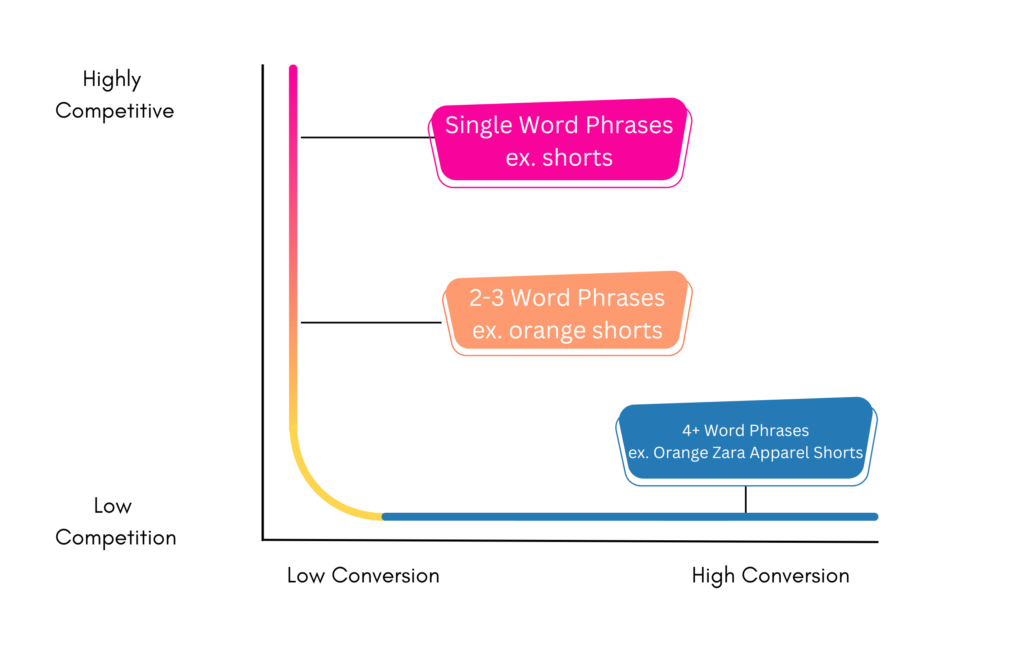
When finding SEO keywords, it's important to understand the difference between short-tail and long-tail keywords. Short-tail keywords are brief and more general, consisting of one to three words. They usually are common in search queries, but your company can easily get lost among the competition.

On the other hand, long-tail keywords are more specific and descriptive, often containing three or more words. With a lower search volume, they are less competitive and have higher conversion rates.

For example, if you own an online shoe company, a short-tail keyword might be “shoes.” Imagine all the businesses that come up when someone types in “shoes.” But if you narrow down the search with a descriptive long-tail keyword like “women’s running shoes in bright colors,” you may have a chance at showing up in the results and targeting a more specific audience that is more likely to convert.

If you wonder how to determine the best keywords for SEO, combining short- and long-tail keywords will help you reach a broad audience while also narrowing in on your target customers.

Understanding Keyword Intent

Keyword intent refers to the purpose or motivation behind a user's search query. Getting inside the head of your potential customers is crucial for building and optimizing your website effectively.

There are four main types of keyword intent: informational, navigational, investigational, and transactional.
• Informational keywords are used when users seek information or answers to their questions. For instance, typing “how to repair a hole in the wall” is an informational keyword.
• Navigational keywords are used to find a specific website or brand. “Shoe company that uses recycled plastic” is a good example of a user looking for a specific brand.
• Investigational keywords are used to research a product or service before making a decision. An example is when a user types, “Is retinol cream harmful to use long-term?”
• Transactional keywords signal that users are ready to make a purchase. A user may search “best rain boots under $75,” which usually means they are ready to buy the product if the price is right.

Tailor your content and identify keywords that match the intent of your target audience to attract qualified traffic and improve user engagement on your website.

Best Keyword Research Tools


To conduct effective keyword research, you need the right tools at your disposal. Some of the best keyword research tools in the market include Ahrefs, SEMRush, AnswerThePublic, and AlsoAsked. These tools will provide insights into search volumes, competition levels, and related keyword suggestions.
• Ahrefs offers comprehensive keyword analysis, backlink research, and competitive analysis.
• SEMRush is valuable for extensive keyword data, domain analytics, and content optimization suggestions.
• AnswerThePublic produces content ideas by brainstorming the questions users ask about a specific topic.
• AlsoAsked provides a list of related questions people search, sparking more ideas for your content.

Use these tools and more to uncover hidden keyword opportunities and bring more users to your website.

Researching relevant topics is a crucial step in developing an effective SEO strategy. Start by researching industry blogs, forums, and social media discussions. Pay attention to the questions asked by your target audience.

Stay up to date with industry trends by consulting Google trends and social media hashtags. When you are in the know with the latest on-brand topics, you will be able to attract more relevant customers.

Keyword Selection

Now that you have a better understanding of the different types of keywords and how to research relevant topics, let's dive into the process of selecting the right keywords for your business.

Step 1: Choose a Primary Keyword to Target
Choose a primary keyword that captures the main idea of your product or service. For example, if you have a website with recipe ideas for healthy breakfasts, the primary keyword should be “healthy breakfast recipes.”

Step 2: Compile a List of Secondary Keywords
Provide a list of supporting keywords to serve as secondary keywords. You can use short- and long-tail keywords in the list. For your breakfast recipe website, you may choose “high-protein breakfast” or “vegan breakfast ideas that taste good.” Use keyword research tools to help compile your list.

Step 3: Identify Search Volume
How many times did someone use your keyword in a search? The search volume will answer that question within a specified timeframe. You can use this information to identify the keyword’s popularity and potential to reach your target audience.

If a search volume is high, you must also consider the competition associated with the keywords. Will your business get lost in a sea of competition? Use Ahrefs and SEMRush to provide volume data and help you choose related keywords that may not be as saturated.

Step 4: Perform Benchmarking

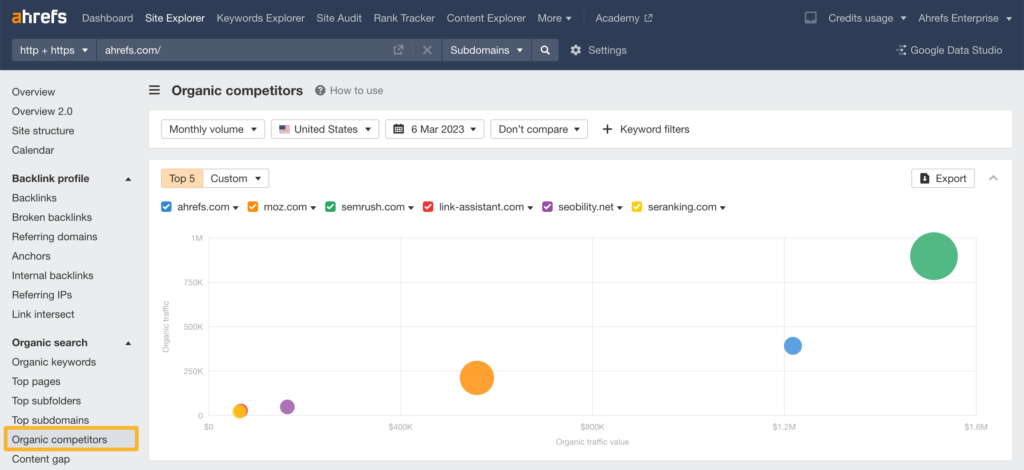
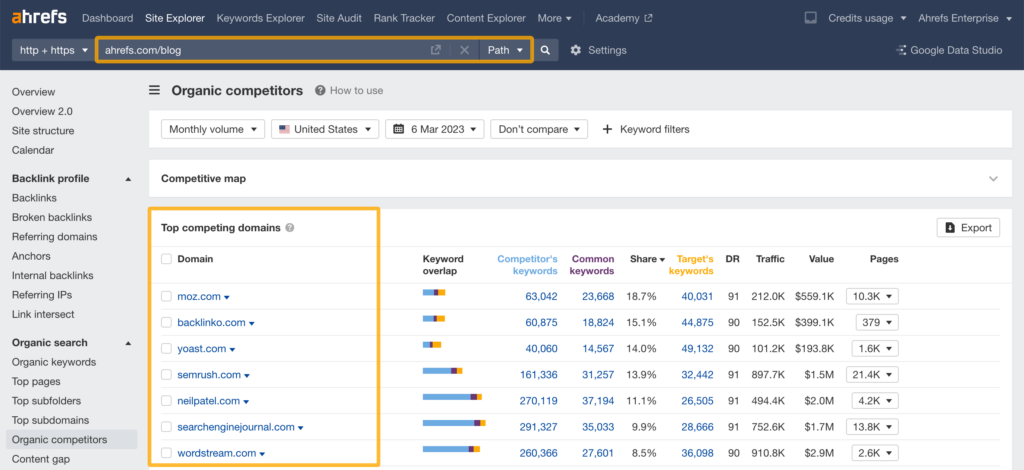
photo from www.ahrefs.academy

Conduct competitor research by performing benchmarking. Analyze competitors’ keywords to identify new keywords and find what is working for them that may also work for you. Ahrefs is a tool that will analyze your competitors’ keyword rankings.
Pinpoint keywords relevant to your company, but set you apart from competitors. Then you will narrow in on an audience more likely to convert.

Step 5: Discover Keywords with Low Competition
Targeting keywords with low competition can be a game-changer for your website's visibility. These keywords may have lower search volumes but a higher chance of ranking well in search engine results.

Finding less competitive keywords and using them can attract quality traffic by weeding out all the competition. You can maximize the benefits of keyword research tools when you identify relevant keywords with lower competition and decent search volumes.

Keyword Mapping


Now it’s time to learn how to do keyword mapping. Is each page of your website optimized for search engine results? A good keyword mapping template will help you achieve that.

What Is Keyword Mapping

Keyword mapping is the strategic process of matching keywords to specific pages on your website to ensure that each page has an excellent SEO presence. It helps search engines recognize the relevance and purpose of each page, improving ranks in search results.

How to Do Keyword Mapping?

Start by creating a list of your target keywords and the pages you want to optimize for those keywords. Assign each keyword to a specific page based on the content on the page and the intent. Ensure that the keyword appears in the page's title, headings, meta description, and within the content itself. This makes it clear to search engines what can be found on the page, increasing the chances of showing up in search engine results.

E-commerce Keyword Mapping Template

For e-commerce websites, keyword mapping is especially important. The E-commerce Keyword Mapping Template helps you organize and map your keywords effectively.

(https://docs.google.com/spreadsheets/d/12JAa1LtimcB9-ExhJHOgFjaD4jwOn_zqrkdGXea2m8g/edit?usp=sharing – our table

https://docs.google.com/spreadsheets/d/1E1fgit8sVy7I9c8DOWz7bq8gcjB3ai4Q4zu0UZhGFeE/view - competitor's table) They may want a screenshot from one of these

This keyword map template allows you to track the target keyword, the corresponding page URL, and the metadata. You can get a full vision of your website, including all the pages, to ensure they have been optimized with intentional and researched SEO keywords.

Find Success by Choosing High-Performing Keywords

Choosing the right keywords for your business will increase your website's visibility and drive targeted traffic. You can expect improved SEO results by understanding the different types of keywords, conducting thorough keyword research, and implementing keyword mapping strategies.

Choosing the right keywords is not a one-and-done process. You should continually review each keyword’s performance and stay competitive in the industry. When you are armed with researched and high-performing keywords, you'll be able to achieve your SEO goals and further the success of your business.

Got questions or need personalized advice on keyword selection and SEO strategies for your business? Contact us today, and our team of experts will be happy to assist you in optimizing your online presence.

May 16, 2023 — No Comments

How to Use Social Media for Effective Content Marketing

Social media is a wonderful way to get the word out about your business. But mindlessly posting captions and links will not get the right audience to your website. Social media is a way to build a community that will connect with you and will support your brand as you release new products.

How can you use social media to be a high-quality extension of your website that promotes community engagement and traffic to your website? Be strategic about your content, including promoting longer-form content found on your website.

In this article, we will discuss ways to use social media to promote your content and bring brand awareness to a wider audience.

10 Tips for Using Social Media to Market Your Business

Social media is used by millions of consumers every day. People log in to social media accounts to apply for jobs, get their news, connect with friends, and find humor during breaks. They follow brands they love, mostly when they can connect on shared passions.

Your social media accounts should reflect your company’s mission. Each picture and carousel should be presented with top-quality workmanship. People who view your social media grid should feel inspired and excited to press Follow on your profile page.

Use social media for effective content marketing by following these tips:

1. Create a Content Calendar

The first step in using social media for content marketing is to create a plan. You cannot get far with promoting your content if you do not have a vision of what each post will look like. A content calendar will eliminate repetitive content and help you see the big picture. Depending on the top-performing posts, you can also tweak your content calendar from month to month.

2. Choose Multiple Formats for Content

What kinds of content do you want to share? You can post videos, still pictures with background audio, carousels or infographics, or professional photos of your product or service. A variety of content is preferred. Learn the algorithm to see which kinds of content perform the best. For example, videos are top performers right now. So how can you translate your content marketing efforts into a video format?

3. Spark Engagement

Each post you publish should allow your audience to engage with you. Whether you are looping them into the product design process by posting polls or asking their opinion on something in your personal life, give them a chance to comment and be heard. Each time your followers ask a question or vote, they feel more connected to your brand, increasing their brand loyalty.

4. Tailor Content to Specific Social Media Platforms

If you have LinkedIn, TikTok, and Instagram, your target audience differs for each platform. LinkedIn has a more professional audience where you can post articles and findings relevant to your industry. TikTok offers a younger and more casual audience, so curate your posts with that in mind. Instagram is a little bit in the middle, where your videos and pictures should always be thoughtful, diverse, and professional.

5. Add Personality and Vulnerability to Your Content

Even though you are marketing a business, social media gives you a chance to get real with your audience. Tell stories that people can relate to. Share your passions to see if you can find a shared purpose with your followers. And relay obstacles and failures along the way so potential customers can see your journey and connect with you through the ups and downs.

Social media is a platform where users want to read what’s current here and now. On Google, they may come across an article posted two years ago. But on social media, they want to hear what you have to say about current news. Hop on trends before you are the 50th post they’ve seen using the trend. Create memes that make them laugh because they are so relevant to today’s conversations.

7. Promote Your Social Media Pages

There are many ways to promote your social media pages. You can post articles from other creators and link to their page. You can collaborate with other companies to create videos or cross-promote your products. Invite your audience to share your content to get more eyes on your page and spread brand awareness.

8. Stay Consistent and Implement SEO Components

When you first start out, you may have a couple of dozen followers and even fewer eyes on your posts. It can feel discouraging! Consistency is key with using social media for content marketing. Keep posting a variety of posts, and remember that Google crawls your social media pages in the same way it does any other page. Use keywords organically and add links to your bio to build your social media’s SEO.

9. Track Metrics that Measure Success

Measure the success of your social media posts by tracking user engagement, organic account mentions, and impressions. Even if you have thousands of followers, your post may not show up on their algorithm. Learn how to play with the algorithm to increase impressions and further increase conversions.

10. Change Your Strategy Accordingly

The very best social media campaigns include pivoting to what works for your company. Social media algorithms are constantly changing. Use the metrics to determine what worked in the previous month and what you need to change to continue with viewer growth.

Once you have a solid plan for your social media strategy, you will be ready to put forth top-quality content and leave a fantastic first impression on your followers. You can watch your followers grow as you stay consistent with your posts and videos.

The more followers, the more traffic to your website and the more conversions to sales. Social media can be a powerful tool for content marketing if you do it right.

Contact Digital Marketing Experts to Build a Meaningful Social Media Audience

Maintaining consistent and engaging social media accounts can be a full-time job! Leave it to the experts to do what we do best. You can build an effective content marketing campaign by using social media to promote traffic to your website.

Ready to boost your social media presence and drive traffic to your website? Contact our digital marketing experts today to build a meaningful social media audience and boost your content marketing efforts.

May 16, 2023 — No Comments

Step-by-Step Guide to Optimize Your Content for Maximum Visibility

It’s time to revamp your website and optimize content for SEO. Where do you start? The goal is to get your website to rank well with Google and bring organic visitors to your site. Once people click on your site, you want them to stay around and explore. So first, take a good look at your existing content.
Is your content easy to read with headings and short paragraphs? Is the content professional and free of spelling and grammar mistakes? Leave a good first impression when you learn how to optimize content for SEO.

When you implement a content optimization strategy, you will climb Google rankings until you find your company on the first page of search results. We want to help you get there with our content optimization tips.

Understanding Content Optimization: What It Is and Why It Matters

What is content optimization?

The words on your website are not just there to fill in the spaces. They have a purpose. Optimize your content for SEO by adding relevant keywords, cleaning up the page for readability, and eliminating any fluff.
When a potential customer searches Google, your website is more likely to come up in the search results when it includes words and phrases from the person’s question.

Create a content marketing plan that includes optimizing your content for SEO. Here are some benefits:
• Increased organic visits to the website
• Increased sales conversion rate
• Higher quality content for a better customer experience
• Widespread brand awareness

It’s necessary to optimize your content for SEO to increase traffic to your website. Consumers rarely get to page two or three in the search results. Use a solid SEO strategy to gain the trust of your target audience.
Once your page consistently shows up on the first page of Google, you will prove your credibility with potential customers. Therefore, your content optimization system is a critical component of a winning SEO strategy.

SEO Content Optimization: 8 Key Elements to Include
What are the keys to content optimization? Before you make a plan, do your industry research. What are other companies doing to increase traffic to their websites? How do they rank on Google search?
If your competitors are doing well, learn about what’s working for them and how to implement success for your company. Then, read more to learn about the vital components of a successful content optimization strategy.

1.Find Out Relevant Keywords with Traffic Potential

List the possible phrases someone would search to find your product or service. For example, if you own a sports medicine clinic, they may search “knee doctor near me.”
This broad keyword applies to your business, but pull up the keyword in Ahrefs to see if the keyword is too common and competitive to garner first-page results. Ahrefs can identify which keywords will apply to sports medicine without being overused by similar companies in your area.
Which keywords have high-traffic potential? Which keywords are not oversaturated? For the sports medicine example, you may narrow it down to “sharp pain in knee” or “can I still run with foot pain?” Look for the high traffic potential in related keywords and add those to your content optimization strategy.

2. Align with Search Intent


You may find a keyword with high-traffic potential, but what is the intent of the search? For example, if someone types “how to nurse an injury without visiting a doctor,” you may run the risk of targeting a customer that never intends to visit your clinic.

Other examples include users who search for DIY ideas. They are usually not looking to spend money on a service or product. Sometimes you can get the readers to your website by offering tips and inviting them to visit a trusted professional like yourself for the best results. If they are overwhelmed with the list of tips, they may follow the link in your CTA at the end of the article.
Pay attention to the tone, angle, and format of the keyword phrase. The best part of content optimization for SEO is that you can test keywords to see if they return better search results. If they do not, change your content strategy and move on to the next keywords.

3. Analyze the SERP and Cover Everything Your Audience Wants to Know
Study the search engine results page (SERP) to find out what is missing from the existing content. Can you fill in the details and information that consumers may be seeking?
Use Ahrefs and its Content Gap feature to enter your URL and see if there is a content gap. Then edit your article to include underused keywords and information to climb higher on the SERP.
SEOLyze is also a valuable tool that scans your article to ensure you cover all keywords with high traffic potential.

4. Offer Something New and Authentic
You can include new and unique information on your site by tapping into underused keywords.
What sets your business apart from others in the industry? Tell your story in a way that others can relate to. Get vulnerable. Bring something to the table that builds brand loyalty and engagement.
When you add authenticity to your content, you will build a community as you increase brand awareness. If someone lands on your website due to content optimization for SEO, invite the customer to stay awhile through top-quality content.

5. Make it Readable and Engaging
Most readers want to scan your article and find the solution to their problem. Write content with eye scanning in mind. Include short paragraphs, headings, infographics, and bullet points.
Lousy grammar will immediately give the wrong impression. In addition, flowery language and elite vocabulary will turn consumers away. Find the happy medium with an authentic voice.
Edit your content for a conversational and easy-going tone. Welcome readers in with your down-to-earth style.

6. Craft a Compelling Title and Description
A title should be short and to the point. Tell the reader what kind of article they should expect – a short blog, a listicle article, or a guide with a table of contents. Include the primary keyword phrase in the title, so the consumer knows they will find the answer to their query.
Meta descriptions should also be kept relatively short. For example, include the main keyword, company name, and call to action. Always make sure each meta description is unique.

7. Optimize for Schema Markup


Provide information on the page that will help Google recognize your industry. For example, a cooking blog may include lists at the bottom of each recipe that is structured data, like cook time, temperature, calories, and more.
Use Schema to see if your structured data is optimized. Adding structured data to your website will increase click-through rates (CTR) and result in more engaged consumers visiting your site.

8. Build Sufficient and High-quality Backlinks
Once the content is written, it’s time to apply high-quality backlinks. Even if you have internal links that lead the website visitor to other areas of your website, building backlinks is a vital next step that will ultimately prove your credibility with Google.
When other websites link to your site, you will be acknowledged as more trustworthy and reputable. High-quality backlinks direct to websites with tried-and-true facts. Include backlinks to universities, statistics, and government organizations to increase your SEO.
Backlinks help websites increase their SEO visibility, including an increase in CTR. Plan content optimization for SEO that includes reputable, non-competitor backlinks.

Maximize Your Results by Following These Tips

Now that you understand the importance of content optimization, you can create a content strategy for your website. SEO will benefit your business by bringing in organic visitors. You do not have to pay for someone to search on Google and click on your site.
Bring more traffic to your website with content optimization for SEO. The more visitors to your website, the more sales conversions.

Ready to optimize your content for maximum visibility and drive organic traffic to your website? Contact us today to create a tailored content strategy that boosts your SEO and engages your target audience effectively.

May 16, 2023 — No Comments

How to Write SEO Titles with Examples (2023)

How much thought do you put into writing a title for your web pages? If your website comes up at the top of the search results but never receives a click, it’s possible your website has an underperforming title.

How can you grab a consumer’s attention with limited words? Include SEO titles in your SEO strategy to maximize your search result rankings. Let’s discuss the aspects of a good SEO title and provide good website title examples.

What Is an SEO Title Tag?

The first step to writing successful SEO titles is learning what is a SEO title. Page titles for SEO are the writing that shows up in blue underlined print at the top of each search result.

The clickable content is one line that gets right to the point. Will this page offer the consumer an answer to their question? The SEO title should deliver this message.

What is SEO title? It differs from the title of your article – it should be short, contain the primary keyword, and grab attention.

What’s the Optimal Length of a Title Tag?

The SEO title length should be between 55 and 60 characters. If your SEO title is too long, Google will cut it off, and the abrupt cut-off may not be in your favor. Avoid a Google-generated title by following the correct character count. Get creative with what information you can fit into a short title.

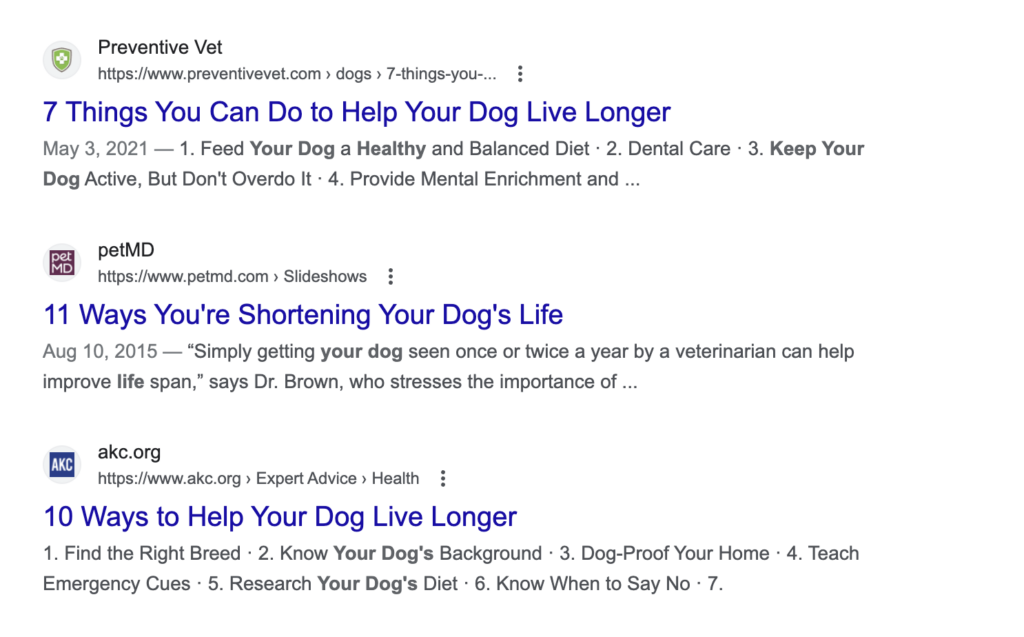
Keep the title concise and engaging. For example, if you search “healthy cat food,” you will find examples of good SEO titles:

  • The Healthiest Cat Food to Dish Out on a Budget
  • How to buy the best cat food, according to veterinarians
  • 15 of the Very Best Cat Foods

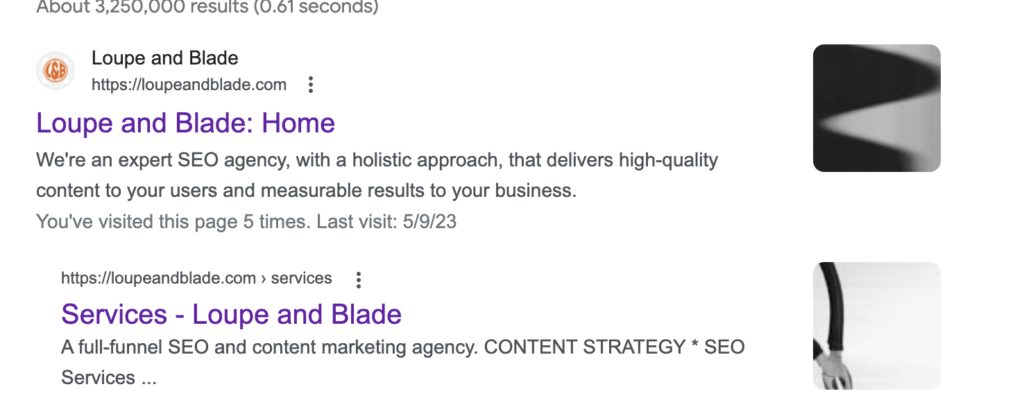
Scroll down to see an SEO Title Tag that is too long:

Include SEO Title Tags in your strategy that shorten the webpage title to a complete thought. Perhaps a better title would be “A Guide to Healthy Cat Food: Ingredients to Seek Out.”

Without the dangling ellipses, consumers will know what they are getting into when they click on your website. It will also give the first impression that your page is put-together and well-planned.

What Is CTR, and How Does It Affect Your Conversion Rate?

CTR is the click-through rate. If your website shows up on the first page of Google consistently but never receives a click, this is a bad CTR. Impressions are the amounts of time your website shows up on a Google search.

CTR is measured by the number of clicks per every 100 impressions. Even if you have a sound SEO strategy that delivers your website to the first page of Google, it doesn’t matter if no one ever clicks on the page.

You will also have a poor conversion rate if you have a bad CTR. If no one ever makes it to your website, they will never make a purchase.

On the flip side, if you have an excellent CTR of 20% or more, you will drive more traffic to your site and increase your conversion rate. The more visitors to the website, the more overall sales.

How to Write SEO-Friendly Title?

Let’s talk about good strategies for writing successful SEO titles. Look through each SEO title example and consider revamping the titles of each page on your website.

Find Your Primary Keyword

Perform keyword research to find the best primary keyword for your product or service. Tools like Google Keyword Planner and Ahrefs are valuable tools for finding which keywords are oversaturated and which will tap into a new audience.

Use long-tail keywords to discover a market that fits your product. Page title SEO best practices include long-tail keywords to find your target audience. The more specific you can get, the better your chances of bringing customers to your site with the intent to make a purchase.

For example, instead of choosing “cleaning services,” you can narrow down your clientele by including “green cleaning services” or “sustainable cleaning services” as your primary keyword.

Make the keyword even more specific and intriguing by adding “affordable green cleaning services.” Test keywords to find short and long-tail keywords that will engage your target audience while remaining specific to your services.

Where Should You Put Your Keyword in the Title Tag?

*image from Ahrefs

SEO-friendly headlines should include the primary keyword at the beginning of the title. Users immediately see the answer to their question when they read:

  • 5 Streak-Free Window Cleaning Tips
  • Non-Invasive Orthopedic Treatments for Bad Knees
  • Wildflower Photography: Families or Individual Portraits

Minimize the user’s effort by grabbing their attention immediately with the primary keyword. They may skip past your listing if the keyword does not stand out to them.

Should Your Brand Appear in the SEO Title?

Yes, include your brand name in the SEO title. You will always benefit from consumers seeing your name over and over again. If your brand name is short, including it in each SEO title is even easier.

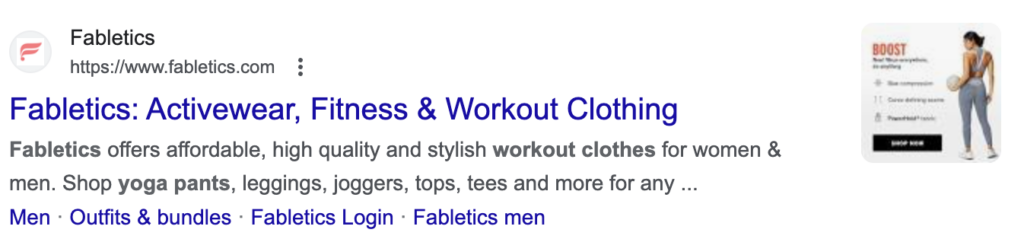
For well-known brands, lead with the brand name in the SEO title so that people see your company and know they can trust the website. Otherwise, tag the brand name at the end of the Title Tag.

Here are some examples of strong SEO titles that include the brand name:

  • Fabletics: Activewear, Fitness & Workout Clothing
  • Home Chef: Meal Delivery Service – Fresh Weekly Meal Kit
  • How to Unclog a Toilet Without a Plunger | HowStuffWorks

Get your brand name out there, especially if it is unknown. If you offer blog articles and guides, let the user become familiar with your reputation by increasing brand awareness in SEO titles.

Use Your Unique Selling Point (USP)

Highlight what users should expect from visiting your webpage that may differentiate your site from competitors. Proving that your company offers a better deal than competitors is always a good idea. Specify the following:

  • In-Depth Guide: Many consumers want a one-stop solution. If you can offer an all-inclusive guide, communicate that in your SEO title.
  • Quick and Easy Solution: Fast, easy, no-nonsense solutions are just what people may seek in their searches. Tell them about it!
  • Affordable: If you have a leg up on the industry and can offer lower prices than competitors, be sure to include that in your Title Tag.
  • Listicle Article with Numbers: Grab attention with a number of tips or suggestions so that readers know they can click on your article and skim it for what they need.
  • Current and Up to Date: Consumers love to know they are reading the latest and greatest. Use dates in your SEO titles to highlight that the article is modern. For example, “Interior Design Trends for 2023” or “Summer 2023 Pool Party Ideas” will entice readers to click and learn more.

What do you offer that competitors may not? Emphasize those differences in your SEO title. Your USP is essential to utilizing long-tail keywords to deliver better search rankings.

Use Punctuation to Stand Out

add an image(s) from SERP that directly shows the difference.

SEO titles can incorporate punctuation to eliminate connecting words and pique the reader’s interest. Instead of writing complete sentences, segment keywords and brand information using creative punctuation techniques.

Here are some examples:

  • Go Nuts (but just a little!)
  • A Good Night’s Sleep | National Institution on Aging
  • About IV Nutrition | Fast, Safe, and Effective

Fit in more words, get straight to the point, and make the title skimmable with the use of punctuation in your SEO Title Tags. Draw the user’s eyes to your creative SEO title.

Use Catchy Words

When you use words that make the reader excited about clicking on your link, you will see an increased CTR. Capture their attention with words like:

  • Free
  • Low-cost
  • Trusted
  • Expert
  • Tried-and-True
  • Supreme
  • Favorite
  • Popular
  • Trendy

Speak to the consumer in a way that you would share exciting news with a friend. Use words to get them hyped with you. Here are some excellent examples of SEO titles with powerful words.

  • 55 Chic Home-Decorating Ideas
  • Unique & Cool Electronics & Tech Gadgets
  • 4 Easy Ways to Fix Your Oven

Do you see how dynamic language can draw you in and give you the desire to learn more? Implement these power words into your SEO title strategy.

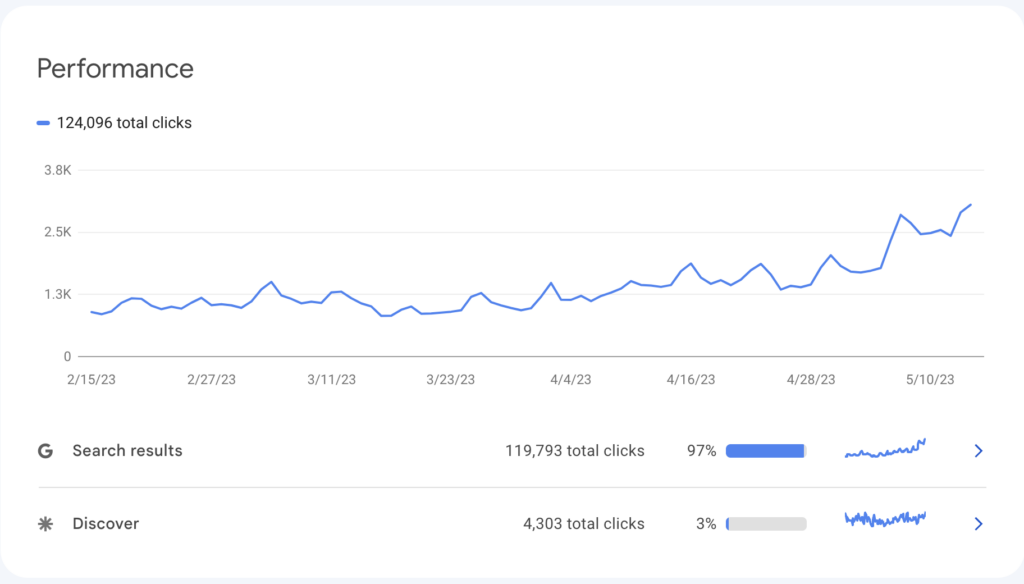
Optimize Your CTR Using Google Search Console Reports

If you are unsure about an SEO title, use Google Search Console to test it. Run a report to find a title that will attract more clicks. Continually using Google Search Console will help you see the metrics needing improvement.

An SEO title is not permanent. You always have the chance to change it to render better results. No SEO strategy is a one-and-done process. Create an SEO strategy that works by being open to changes as the metrics roll in.

What If Google Doesn’t Use My SEO Title?

After 2021, Google released new details for generating titles. They want to reflect the content that the user will see when they arrive on the webpage.

Google generates titles based on the main header information and even adds the website name to the title when applicable. Here are some circumstances that may lead to Google generating a title for your webpage:

  • The current title is too long.
  • The current title is stuffed with keywords that do not make sense.
  • There is no current title, or it is too generic.

Make your own SEO titles for your website pages by adhering to the rules for character length, dynamic wording, and proper branding. Follow the tips we discussed in this article to create an SEO title that will really stand out.

Conclusion paragraph

If you’ve learned anything from this article, it should be that the SEO title for each page on your website is an essential part of your SEO strategy. You can do everything right but have a huge miss in your Title Tag that negates every other step in the plan.

Do not let a page pass by without a dynamic, informative, and brand-inclusive title. Conduct an SEO title audit to ensure all your pages have intentional SEO titles to increase your search rankings.

Lean on the experts to get the job done right. Hire an experienced SEO team to ensure all aspects of your strategy fire on all cylinders.

Have questions about optimizing your SEO titles? Need expert advice on improving your search rankings? Contact us today to speak with our experienced team and elevate your website's performance!

May 16, 2023 — No Comments

What Are the Best SEO Tools for Content Marketers?

When building an SEO strategy, you can access essential content marketing tools to help you achieve the best possible search engine results. Use tools for keyword research, measuring web traffic, and calculating click-through rates.

Find out if your SEO implementation needs tweaking by utilizing top content marketing tools. Once you can measure the success of your SEO strategy, you’ll also be able to identify weaknesses and improve SEO for your business.

Why Do You Need SEO Tools?

Use SEO tools to learn about the success of your chosen keywords, identify duplicate content, and eliminate error pages from your website. The best content marketing tools will help you increase the quality of your content and publish engaging, professional content in your brand voice.

Create a content marketing plan with the help of SEO tools for your website. Content is king, and your website will never survive if you can drive traffic to your site, but consumers never stick around long enough to make a purchase.

Harness the Full Potential of TF-IDF with SEOLyze

TF-IDF is The Frequency-Inverse Document Frequency, which describes the quality of a keyword based on how often it is used in other high-quality articles. Google crawls web pages using your keyword to determine a baseline score. Then you can use TF-IDF stats to determine your keyword’s value and identify missing keywords in your content.

SEOLyze is one of many tools for content marketing that helps you identify the value of your keyword and also suggests keywords to add to your website that will increase the SEO. Take advantage of the tool to implement relevant, unique keywords that never came up in your research. Visit SEOLyze to learn more about this essential SEO tool.

From Invisible to Top Rankings with Sistrix 

Sistrix will allow you to evaluate and track your website rankings. Watch your website climb from nearly invisible on the last page of search results to one of the top rankings. Use free content marketing tools like Sistrix to maximize your SEO efforts.

Sistrix will not only track keywords on Google, but it will also extend to Amazon, social media, and other formats that will bring your product or service to a consumer’s attention. If you have on-page issues on your website, Sistrix will identify the problems and suggest methods for fixing them.

Sistrix will also analyze your competitors to identify what you’re missing on your site. How can you surpass other websites in the industry to reach the top? Sistrix will help.

Find, Research, and Validate Content Ideas with BuzzSumo

BuzzSumo will search your website to find, research, and validate new content ideas. The tool identifies a hole in the industry that you can capitalize on. Bring unique users to your site to increase your leads and conversions.

Rise at Seven used BuzzSumo to find the most engaging articles across the industry. The articles are shared across social media sites and elicit an emotional response from the user. The award-winning SEO and content marketing agency experienced faster, more meaningful results.

Consequently, Rise at Seven was able to scale at a competitive rate because of BuzzSumo. Now they not only have more bandwidth to focus on other aspects of their business, but they also won a $400K pitch that will bring even more business.

“Ahrefs simply rocks your SEO and reveals tons of marketing opportunities in a few clicks!”

As you can see, customers are blown away by what Ahrefs can do for your SEO strategy. Ahrefs is a widely used SEO tool that helps you identify what you need to rank higher in search results. Find out what your target audience is searching in Google. Analyze competitors. Conduct a full website audit to detect content that needs editing. And find more opportunities to backlink.

Learn about the users that enter your website. Where do they live? Which keywords brought them there? And how can you improve their experience? Ahrefs will also show your mobile ranking to see if your website is mobile-friendly.

This all-in-one SEO tool will help you increase your rankings and track your improvements over time. Visit Ahrefs to learn more.

Customers agree that Semrush combines the best of Google Trends, Moz, Hootsuite, and other SEO tools to bring you convenience in one tool. Get metrics for PPC and social media marketing, search rankings, keyword performance, and competitor research by using Semrush.

Find out which competitors have a corner on the market of a specific keyword. Check competitors’ backlinks to see where improvements can be made to keep up. Which keywords are ranking well for your business that you never knew about? And how can you get a well-performing page at the top of the search results with just a few changes? Semrush will guide you through the steps.

As one of the most versatile content marketing planning tools, Semrush can identify keywords specific to your company and drive more traffic to your website.

Keyword Clustering with KeywordInsights AI

What do you know about keyword clustering? KeywordInsights AI is one of the best content marketing research tools because of its advanced keyword research technology. Companies like Land of Rugs find success by driving users to the website through blog content. Land of Rugs used Keyword Insights to input a cluster of keywords they needed to target. The AI software immediately created a list of content ideas to include on the website. Keyword Insights also suggested a list of titles for the content.

Before using Keyword Insights, the Land of Rugs blog received about 7,000 views per blog. After implementing suggestions from the SEO tool, the blog views went up to almost 16,000 per page. With more than double an increase, sales have skyrocketed for Land of Rugs. They have Keyword Insights to thank.

Use Keyword Insights for keyword research, title and meta description suggestions, content ideas, and keyword clustering. You will be sure to include each keyword in your content and target your ideal audience with the help of Keyword Insights.

Expand Your Thinking in Terms of Content Creation with AlsoAsked

Use data from other searches to find out what others in the industry are asking. Whether you are conducting keyword research, looking for content ideas, or improving current content, you can gain an edge over competitors by using AlsoAsked.

What do other businesses ask about keywords in the salon industry? Can you tap into a keyword or subject that is prominent in your industry that you didn’t know about? AlsoAsked will reveal keywords and content ideas that your website is missing.

See for yourself at AlsoAsked. Once you type a question, click around to see if a similar question may result in more valuable results for your business.

Know What Your Ideal Client Is Asking with AnswerThePublic

What if you learned what people were searching for straight from your target audience? AnswerThePublic collects search queries conducted by consumers every day to help you identify niche keywords that you did not know were on consumers’ minds. One AnswerThePublic user states, “It uncovers rich, less crowded, and sometimes surprising areas of search demand we wouldn’t otherwise reach.”

By using AnswerThePublic as an SEO tool for content marketing, you will pinpoint keywords and content ideas that will bring unique users to your website. These users may be searching for your exact product without knowing it, and now you can deliver them a solution.

AnswerThePublic offers more than just keyword research. Use the tool to keep up with changing trends. Be the first to know why a consumer is looking for your product due to a TikTok video or YouTube tutorial. Get into your ideal customer’s psyche by learning about their ever-changing search queries.

Conclusion paragraph

Even if you have excellent expertise in content marketing and creating quality content, you will always benefit from using SEO tools for content marketing. Choose these tools when you need specific keywords, content ideas, and metrics for tracking success. You will always improve your SEO when you actively search for improvements for your website.

Stay competitive with SEO tools for content marketing. If competitors in the industry use these tools, you need to up your game and use them also. And if they aren’t using them yet, gain an edge by being the first on board.

The best thing you can do for your business is increase search result rankings to bring organic traffic to your website. A piece of content that you publish today may consistently bring in sales as it ranks at the top of search results for years to come. Use SEO tools to identify the content that will garner the greatest gains.

If you have any questions or need assistance with your SEO strategy, feel free to reach out to us. Our team is here to help you optimize your content and improve your website's search engine performance.

May 9, 2023 — No Comments

7 Quick SEO Tips for Your Business

Sometimes businesses can get caught up in the weeds of SEO implementations, feeling overwhelmed with figuring out where to start. SEO does not have to be complicated. Even the smallest changes can get your website on the first pages of search results so that more and more consumers learn about your business and offerings.

So what can you do to increase your business’s visibility on search results? Learn about SEO and quick tips to increase your website’s rankings.

What Is SEO?

Search engine optimization means optimizing your website to appear on the first page of a Google search. This means identifying keywords that users may search to find your product and including those keywords on your website.

SEO is an organic way to bring new users to your site. You do not have to pay for sponsored ads when your website automatically shows up toward the top. With SEO, an article published two years ago can bring in new sales and conversions each day. So how can you implement SEO for your business?

7 Quick SEO Tips

While SEO is an ongoing process that does not produce immediate results, there are some things you can do now to get the ball rolling. Is your website optimized to handle an influx of users? Does your content make a good impression on first-time visitors?

Take a look at these tips to see what you can do to improve your company’s SEO strategy.

1. Conduct Keyword Research

There are many keyword research tools to identify available keywords in your industry. Ahrefs is an excellent example of a keyword tool that will suggest related keywords that may not be as competitive as other main keywords for your company. If you use a keyword that does not set your company apart, your website will get lost in search results.

In addition, you can track your keyword results to detect the keywords that perform well and eliminate the keywords that are not ranking.

2. Set Up Google Search Console

Take advantage of Google Search Console. The tool will help you track rankings and identify weaknesses in your website, including 404 error pages, broken links, and unacceptable backlinks.

Google will crawl your site and highlight the areas that need improvement. Which pages are performing better than others? How can you find the same success on your other pages? If Google does not index your site, Google Search Console will tell you why so that you can fix the issue and be back in action.

3. Track Metrics with Google Analytics

Google Analytics will collect data from your website to bring you insights into what you can improve. Find out how many people visit your site, what led them to your site, their geographic location, keywords that drive traffic, and real-time conversions.

Easily access reports to watch your progress on rankings or keyword success. Use Google Analytics to work hand-in-hand with Google Ads, Google Search Console, and more. When you measure the success of your SEO strategy with real metrics, you can improve on your weak points to create even better results.

4. Create Your Google Business Profile

Google Business Profiles are free to create. Fill out your business name and information, including a place to leave reviews. Then your company will organically show up when people search for “hair salon near me” or “dog grooming services.”

Google Maps pulls up your Google Business Profile, where people can learn more about your business, visit your website, and read reviews. Be sure to respond to all negative and positive reviews to prove yourself a trustworthy business that cares about the customer experience.

Optimize your profile with pictures, contact information, and a steady flow of reviews. Incentivize your current customers to leave reviews to build up your reputation.

5. Analyze Competitors

Part of building a successful SEO strategy is learning about your competitors. How do they rank on Google? How can you learn from your high-ranking counterparts to find success along with them?

Semrush is an excellent tool for analyzing competitors. Learn why a keyword ranks well for one competitor but not for you. Do they have high-quality content? Are they strategic about creating Titles and Meta Descriptions with keyword optimization? What about the quality of their pictures and website load speed?

So many factors go into why one website ranks over another website. But you will never know how to improve without evaluating the competition.

6. Conduct a Website Audit

A full website audit is necessary for improving your SEO. Remove any poor-quality pictures, grammatical errors, or graphics that are too busy and slowing down your site. One lousy impression is enough for a user to X out of your site.

Are all the links working? Are the pages skimmable and engaging? Does each page have optimized content with relevant keywords? All of these aspects of a good website can be reviewed when you audit your website. Use Google Search Console to detect significant problems and prioritize fixing them first.

7. Create Ongoing Content

High-quality, engaging content is essential for your website. Welcome the visitors to each page and answer their questions immediately. Publish a weekly blog or guide to give visitors insight into industry-related topics. Sometimes people get to your page by Googling “kid-safe cleaning products,” and your list of natural products is how you introduce your brand and build trust with your audience.

In Conclusion

Each business has a chance to fight for the first page of search engine results when a consumer searches for “natural shampoo” or “does life coaching work?” What are you going to do to drive brand awareness and build a loyal brand community? It starts with getting your name out there.

The more your name appears on Google searches, the more people will become familiar with your company and what you offer. Then when a need arises, they will remember your business as a reputable and trustworthy source.

Improve SEO for Your Business

It’s never too late to get into the SEO game. Begin with minor website changes, and watch your rankings climb.  Do you need help with SEO strategies and managing all the metrics? Hire SEO experts to take over your strategy and increase organic visitors to your website. The more visitors, the more conversions to sales. What more could you want? Contact Loupe & Blade with your SEO strategy ideas and questions.  

LB-logotype-long-black

Copyright Loupe and Blade 2026

Loupe and Blade — An SEO and AEO consultancy · Chicago, IL Audit submissions are used only to build your audit. We don't share or sell your data.

Read the full privacy statement

michael@loupeandblade.com · © 2026 Loupe and Blade